

Built a utility to fully automate vulnerability notification processing and Domain Vet workflows. Created custom internal tool for automated beaconing analysis, IOC Lookup, IOC correlation, threat hunting, analyst triage, authorization statistics, and briefs.
Analyzed and cleared hundreds of vulnerability notifications. Automated patching workflows via Cyber Fusion. Created tooling and bug reports for platforms including Joulix, Tenable, and Axonius.
Conducted network vulnerability analysis using DISA STIGs and NIST frameworks.

Drone pilot and Cyber team lead. Led a communications application project winning 1st place in "Most Tactically Relevant for Maintenance Data" and 2nd place in "Most Tactically Relevant for Cyber Operations" at the BRAVO One Hackathon.
Led 6 applications into production on Platform One. Designed antivirus scripting solutions adopted across platforms. Led mission application supporting evacuation of 123,000+ refugees during Operation Allies Refuge. Led 3 AI applications into production for DoD.

The University of the Cumberlands is accredited by the Southern Association of Colleges and Schools Commission on Colleges (SACSCOC). Founded in 1889, its Ph.D. in AI program was ranked No. 6 nationally for Best Online AI Doctorate by Learn.org.

Norwich University is accredited by the New England Commission of Higher Education and has been designated as a Center for Academic Excellence in Cyber Defense Education by the National Security Agency and Department of Homeland Security.

Founded in 1851, the University of Minnesota Twin Cities is a public research university and the flagship campus of the University of Minnesota System. As Minnesota’s only land-grant university, it combines teaching and research with public service and community engagement across the state.

Added input validation and memory safety fixes to 3DThesis, a heat transfer simulation code. The changes address crashes, corrupted results, and memory leaks caused by malformed input files.
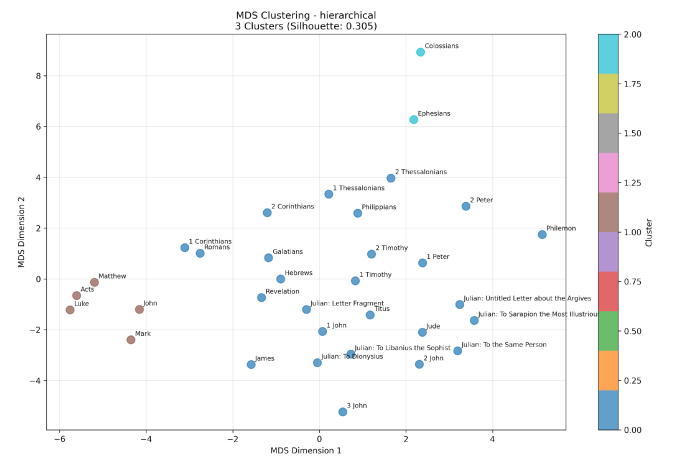
No letters are secularly verifiable as authentically Pauline, and thus there is no authoritative reference point from which to effectively employ computational stylometric analyses. This study illustrates the limits of importing quantitative methods into disciplines with unresolvable historical dependencies.